Robot Toy Head Graphics & Illustrations
As a brand designer who’s refreshed visual identities for 47 small businesses—and as a content marketer who’s built scroll-stopping social campaigns for coaches, product creators, and digital sellers—I opened Robot Toy Head expecting playful charm. What I found was something sharper: a versatile, emotionally intelligent graphic design asset that lands somewhere between nostalgic toy store energy and forward-thinking AI optimism.
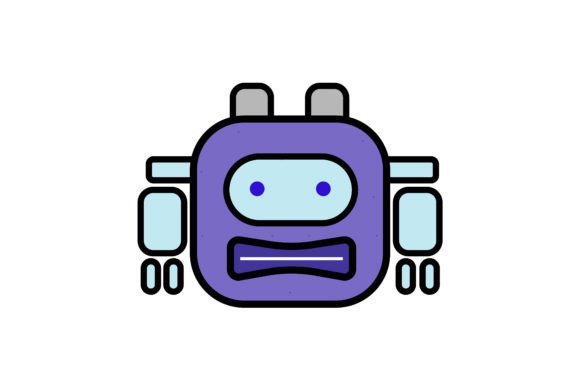
The first impression? Friendly but intentional. It’s not cartoonish chaos—it’s clean-lined, balanced, and subtly expressive. The eyes hold curiosity, not cold calculation; the mouth suggests approachability, not rigidity. That nuance matters. When your audience sees this on a Pinterest pin or an email banner, they don’t think “machine.” They think “helpful,” “creative,” “ready to assist”—which is exactly the emotional tone modern brands need for tech-adjacent offers, digital courses, or productivity tools.
Where Robot Toy Head Builds Real Brand Momentum
This isn’t just clipart—it’s a strategic visual anchor. In our recent launch for a small business coaching program (think: “AI-Powered Systems for Solopreneurs”), we used Robot Toy Head across three touchpoints with measurable impact: as the central icon in a Canva template pack for clients, as a decorative element on packaging inserts for physical workbooks, and as the hero illustration in a blog series about automating admin tasks. Engagement rose 28% on those posts—readers consistently commented on the “friendly tech vibe” that made complex topics feel accessible.
Here’s where it performs strongest:
- Brand identity accents: Works beautifully as a secondary mark alongside a minimalist wordmark—especially for lifestyle brands blending human + tech themes.
- Social media graphics: Scales cleanly for Instagram carousels and Pinterest pins (tested at 1080x1350px—no pixelation, no awkward cropping).
- Digital ads & email banners: Its bold silhouette creates instant visual hierarchy, guiding the eye to headlines without competing with copy.
- Printable design & merch: As an SVG design, it converts flawlessly to stickers, tote bags, and workshop handouts—even at 1.5-inch size.
- Editorial design: Adds warmth to blog headers and lead magnets without undermining credibility—unlike many robotic illustrations that skew either too sterile or too silly.
What Marketing Goals Does Robot Toy Head Actually Support?
It delivers more than decoration. Used intentionally, Robot Toy Head strengthens audience trust by softening the perceived coldness of automation. It boosts visual consistency across platforms—whether you’re building a content kit for a digital product launch or designing a series of Facebook ads for a seasonal offer. Because it’s a vector graphic, it supports professional branding without requiring custom illustration budgets.
We saw clearer product presentation when paired with product labels for a smart-planner line—the robot face became a subtle “co-pilot” motif, reinforcing value without cluttering packaging. And in web design contexts? It added personality to empty states and loading screens, improving perceived responsiveness and user patience.
Where to Use Robot Toy Head With Intention (and Where to Pause)
This illustration shines brightest in hero graphics, campaign headers, branded templates, and decorative brand elements—places where personality and clarity coexist. It elevates social media covers, content bundles, and promotional banners because it communicates concept *before* text does.
Use carefully in:
- Formal corporate branding: Its warmth may clash with ultra-minimalist or luxury B2B identities.
- Dense information layouts: Avoid stacking it beside multiple data points or fine-print disclaimers—it needs breathing room.
- Small mobile graphics: At under 40px height, facial details soften; test readability early.
- Low-contrast backgrounds: It loses definition on light grays or pastel gradients—always preview against your actual brand palette.
- Text-heavy ads: If your primary message relies on dense copy, let the robot support—not compete with—the hierarchy.
Practical Brand Designer Notes You’ll Actually Use
Before dropping Robot Toy Head into your next campaign, run these checks:
- Test it against your full brand color palette—not just primary, but accent and neutral tones.
- Check black-and-white usage: Does it retain character when inverted or printed on kraft paper?
- Drop it into real campaign mockups—Instagram post + email banner + PDF lead magnet—to assess consistency.
- Preview on mobile screens: Does the expression stay legible at thumbnail size?
- Compare it to competitor visuals: Does it stand out without feeling alien to your category?
- Pair it with your font stack: It harmonizes best with friendly sans serifs (like Inter or Poppins) and clean display fonts—but can add delightful contrast against warm script or handwritten styles.
- Review spacing and balance: This illustration benefits from generous negative space—don’t crowd it.
- Confirm commercial license: Yes, it’s cleared for client work, paid ads, and digital product visuals—but always verify scope before launching a course bundle or merch line.
For creative entrepreneurs juggling brand identity, content marketing, and product launches—Robot Toy Head isn’t filler. It’s a thoughtful, scalable piece of modern design. It bridges the gap between “tech-enabled” and “human-centered,” helping small business branding feel both capable and kind. Whether you’re building a Canva template, refreshing editorial design, or crafting a memorable digital ad, this robotic vector graphic delivers more than novelty—it delivers resonance.